 Print
Quantum Technology Used to Calculate Optimized Settings That Reduce Radio Interference, Applied to Commercial Network
―Reducing the incidence of low-speed uplink telecommunication during congested hours by approximately 80%―
November 10, 2026
KDDI Corporation
KDDI Research, Inc.
Tokyo, November 10, 2026―KDDI and KDDI Research began applying optimized settings to au network base stations in selected areas of Tokyo (Note 1) on October 2, 2026. The settings were calculated using quantum technology to reduce radio interference among base stations (hereinafter referred to as this deployment).
For the 683 base stations covered by this deployment, KDDI and KDDI Research calculated settings designed to reduce radio interference from an optimization problem involving approximately 101200 (a 1 followed by 1,200 zeros) possible combinations. During congested hours, this deployment reduced the incidence of uplink telecommunication at speeds below 1.5 Mbps, a benchmark for comfortable image uploads and similar activities, by approximately 80%.
In the coming AI-Native Society, uplink telecommunication will become increasingly important. In addition to sending photos and videos or joining web conferences, the growing deployment of autonomous vehicles, drones, and robots is expected to increase the opportunities to transmit video and sensor data from these devices.
KDDI and KDDI Research have introduced proprietary advanced technologies into commercial networks to improve telecommunication quality, including telecommunication area optimization using distributed AI (Note 2). Building on these efforts, the companies have now applied quantum technology to achieve large-scale telecommunication area optimization that reduces interference among base stations and improves uplink telecommunication. Quantum-based optimization offers a different approach from distributed AI and is particularly effective for large-scale combinatorial optimization problems. For this deployment, the companies developed a proprietary interference model that can be handled efficiently by quantum-based optimization methods, enabling practical application to a commercial network.
Going forward, KDDI and KDDI Research aim to expand this deployment to urban areas in Tokyo, Nagoya, and Osaka to further improve telecommunication quality.
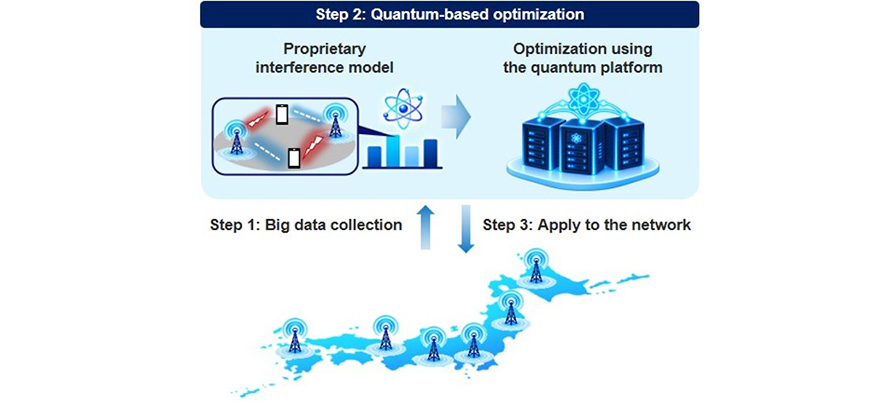
<Flow of telecommunication area optimization in this deployment>
For the AI-Native Society, KDDI is promoting the “Digital Belt” Initiative, which aims to build a nationwide low-latency network and AI computing resource infrastructure covering land, sea, and air by integrating assets such as data centers and submarine cables with technologies such as all-photonics networks (APN) and 6G.
KDDI and KDDI Research will continue to advance both AI and quantum technologies, applying each where its strengths deliver the greatest impact, according to factors such as the scale of the computation. Through these efforts, the companies aim to further optimize the au network and deliver high-quality telecommunication to a broader range of customers.
■ About this deployment
1. Overview
This deployment improved uplink telecommunication quality by analyzing interference among base stations using commercial network data and applying quantum technology through the AI and Quantum Common Platform (Note 3).
2. Features
(1) Developing a proprietary interference model using commercial network data
Using data collected and accumulated daily from the commercial network, KDDI and KDDI Research quantified complex interference relationships among many base stations by identifying which combinations of base stations cause interference and to what extent. They developed a proprietary interference model that can be handled efficiently by quantum-based optimization methods. By incorporating this model into optimization calculations, the companies optimized uplink radio resource allocation for each base station while accounting for actual interference relationships among base stations.
(2) Calculating optimized settings from an enormous number of combinations using the AI and Quantum Common Platform
KDDI and KDDI Research compared and evaluated multiple computational methods incorporating concepts from quantum technology that are available through the AI and Quantum Common Platform, and selected a method suited to reducing radio interference among base stations. Using the selected method, the companies calculated base station settings to reduce interference in seconds (Note 4), despite an optimization problem involving approximately 101200 possible combinations.
(3) Applying the calculated settings to commercial base stations and confirming improved uplink telecommunication quality
KDDI and KDDI Research applied the calculated settings to commercial base stations and confirmed their effect on uplink telecommunication quality in the commercial network. In the areas where the settings were applied, the incidence of uplink telecommunication at speeds below 1.5 Mbps decreased by approximately 50% compared with before implementation, and by approximately 80% during congested hours.
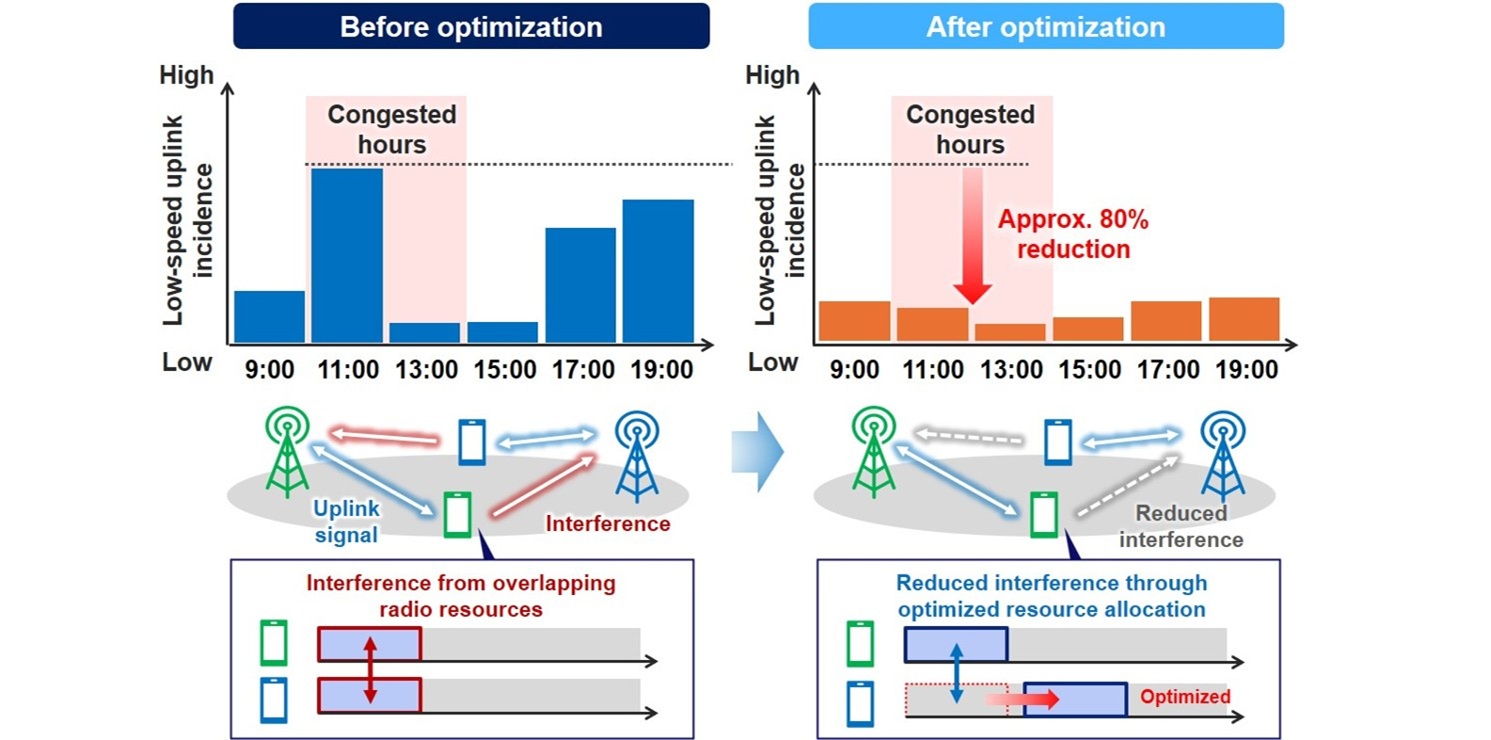
<Comparison before and after optimization in this deployment>
■ About the AI and Quantum Common Platform
The AI and Quantum Common Platform is a business platform being developed under KDDI’s leadership. It is designed to combine AI and quantum computing resources according to the intended use, allowing even users without specialized knowledge of quantum technology to access these resources.
KDDI was selected for “Middleware Development for the Industrialization of Quantum Computers” (g5-3) under the “Research and Development Project of the Enhanced Infrastructures for Post-5G Information and Communication Systems” of the New Energy and Industrial Technology Development Organization (NEDO) under Ministry of Economy, Trade and Industry (METI). KDDI is conducting research and development with domestic research institutions and companies, including KDDI Research. KDDI also envisions expanding applications of the AI and Quantum Common Platform from its own businesses, including telecommunication networks and electric power, to other fields such as logistics and materials development.
For more information: https://tech-note.kddi.com/n/nb8282c8d47dc (in Japanese only)
■ Related articles
KDDI Tech note: What Is “Quantum for Network,” Enhancing au Communications? ―Turning quantum technology into a better customer experience― (in Japanese only)
■ Notes
(Note 1) Parts of Nakano, Kita, and Arakawa wards in Tokyo.
(Note 2) News release dated October 14, 2026
“Distributed AI” Achieves Autonomous Area Optimization in Line with Changing Congestion throughout the Day
News release dated February 18, 2026
Area Optimization Technology in Which Multiple AIs Cooperate Being Introduced at Base Stations across Japan
(Note 3) News release dated August 1, 2025
Selected for the NEDO Development Project “Middleware Development for the Industrialization of Quantum Computers” (in Japanese only)
(Note 4) The calculation time is based on the verification conditions of this deployment. Calculating settings in seconds does not represent the time required for the entire process, from data collection to changing base station settings.
※The information contained in the articles is current at the time of publication.Products, service fees, service content and specifications, contact information, and other details are subject to change without notice.